
When Stories Haunt a Place: Ghost Lore in East Tennessee
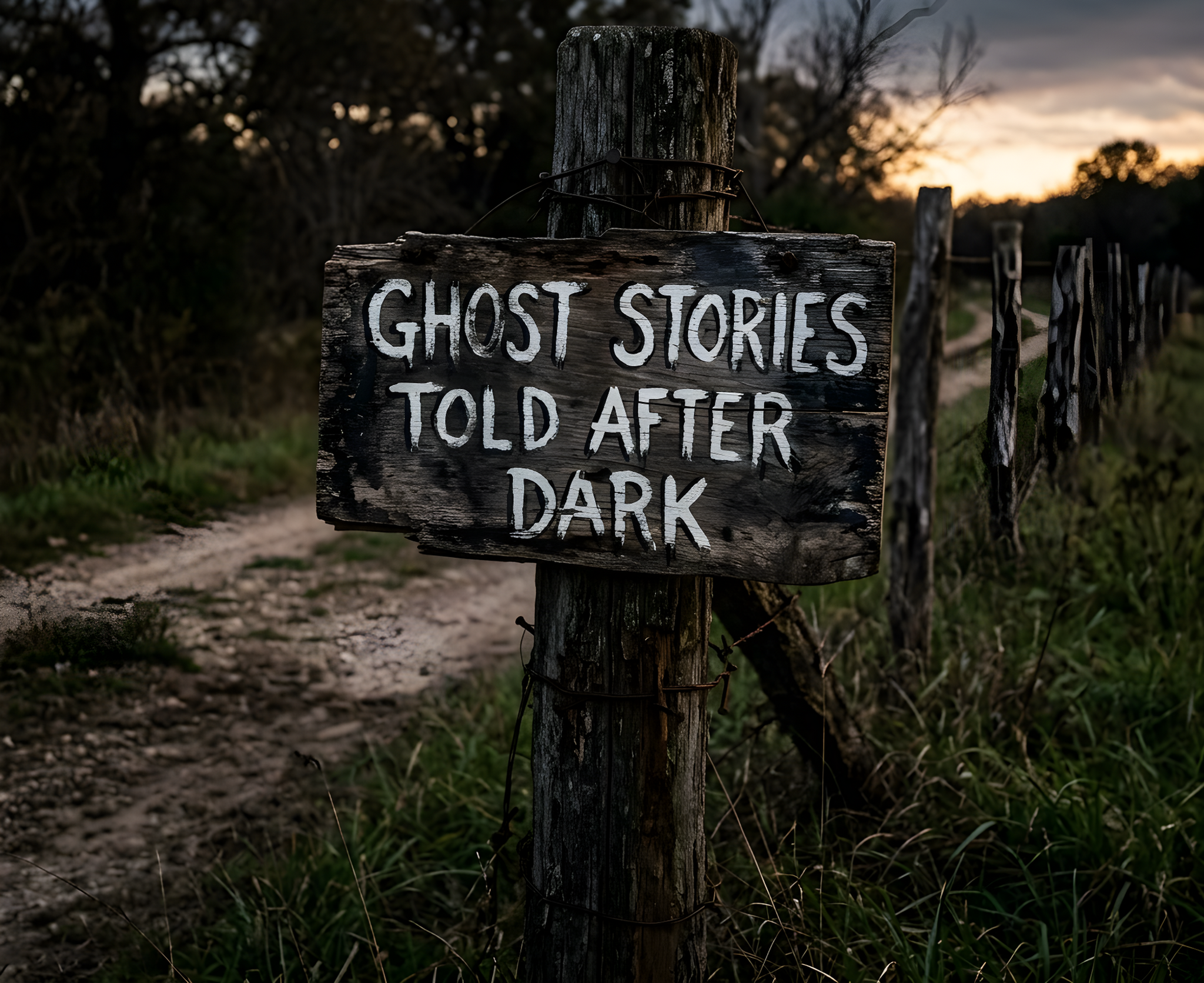
There are places you can drive past a hundred times without giving them much thought.
Then someone tells you a story.
Suddenly, that old tunnel isn't just a tunnel anymore. A trail through the woods feels a little different when you know there once was a house there—and that people are still telling stories about the family who lived in it.
East Tennessee has plenty of places like that. But what may be even more interesting than the ghost stories themselves is what happens to those stories over time.
They get told.
And retold.
Details change. New details appear. One generation passes its version to the next. Eventually, the story becomes so closely tied to the place that it can be difficult to imagine one without the other.
Two East Tennessee places offer particularly good examples: Sensabaugh Tunnel near Kingsport and the Ghost House Trail at Big Ridge State Park.
Their stories aren't the same.
And that's exactly what makes them interesting.
A Tunnel with More Than One Story
Sensabaugh Tunnel is a real place with a very unreal collection of stories surrounding it.
Built in the 1920s and named for Edward Sensabaugh, who owned the land, the tunnel has accumulated enough folklore over the years that asking, “What's the story of Sensabaugh Tunnel?” doesn't necessarily have one answer.
According to an account of the local lore published by the City of Kingsport, one version involves a kidnapped baby. Another turns Edward Sensabaugh himself into the frightening character at the center of the tale. Yet another version is considerably less sinister: Sensabaugh lived into old age and supposedly enjoyed frightening teenagers who ventured near the tunnel by making strange noises.
And then there are the stories of what supposedly happens at the tunnel—cars that won't start, footsteps with no obvious source, the sound of a crying baby, or an unexpected passenger appearing inside a vehicle.
Are all of those pieces from the same story?
Not really.
But perhaps that's the point.
Somewhere along the way, Sensabaugh Tunnel became more than the setting for a single tale. It became a place where stories could collect.
One person heard one version from a friend. Someone else heard another from an older sibling. Teenagers dared each other to go there, and they came home with stories of their own.
Eventually, the tunnel didn't need just one legend.
It had become part of the legend itself.
A House That Disappeared, but the Stories Didn't
At Big Ridge State Park, you can follow a trail named for a house that isn't there anymore.
The Ghost House Trail winds through woods that were once home to families who lived in this part of East Tennessee long before it became a state park. An old cemetery remains. So does the sunken grave of Maston Hutchison.
The Hutchison family home does not.
But its stories do.
One of those stories reaches back to a death in the Hutchison family and a gathering at the house afterward. According to the old tale, those gathered there heard something they couldn't easily explain.
The sound of a woman crying came from upstairs.
Later, after the house stood vacant, there were other stories—strange sounds, unexplained encounters, and experiences along the trail that people continued to talk about.
Eventually, the house disappeared altogether.
You might expect its ghost stories to have disappeared with it.
Instead, people kept telling them.
Today, visitors can walk through the woods where the old homesite once stood. There's no abandoned house waiting at the end of the trail. No creaking door to push open. No upstairs room to investigate.
Just the landscape that remains—and a story that refuses to leave it.
When the Story Becomes Part of the Place
Sensabaugh Tunnel and Big Ridge aren't interesting because they give us proof of ghosts.
They are interesting because they show us what stories can do.
At Sensabaugh Tunnel, the tale seems almost unwilling to settle into one version. Different stories circle the same physical place.
At Big Ridge, the physical centerpiece of the story—the house itself—is gone, yet the story continues to give that spot an identity.
That's one of the remarkable things about folklore.
It doesn't behave quite like a historical record.
History asks us to look for documents, dates, physical evidence, contemporary accounts, and other sources that can help establish what happened.
Folklore asks a different question:
What did people keep telling one another?
Sometimes those two things overlap. Sometimes they don't.
And when we're telling these stories today, it's worth knowing which one we're dealing with.
We can say that Sensabaugh Tunnel exists. We can research when it was constructed and whose name it bears.
We can also say that generations of people have told stories about it.
Those are two different ways a place can be remembered.
One is preserved in the historical record.
The other is carried forward in the stories people tell.
“That's Not the Way I Heard It”
There may be no sentence more appropriate to an old local legend than:
“That's not the way I heard it.”
Maybe your version came from a grandparent. Maybe somebody told it at school.
Maybe you heard it while riding around with friends who insisted they knew exactly what had happened there.
And every storyteller brings something to the telling.
A forgotten detail disappears. A particularly memorable one survives. Two stories may eventually become tangled together. Someone adds something they heard somewhere else.
Years pass.
Before long, nobody is quite sure where one version ended and another began.
That doesn't necessarily mean the tradition has failed.
It may mean the tradition is doing exactly what oral traditions have always done.
The story is traveling.
Why These Stories Stay
There are easier ways to remember a place than through its ghost stories.
We have maps. Photographs. Historical markers. Archives. Old newspapers. Cemeteries and public records.
But none of those quite works the way a good story does.
A story gives us a reason to lean closer.
Someone who has never wondered who lived around Big Ridge before it became a state park might become curious because of the Ghost House Trail.
Someone who knows Sensabaugh Tunnel only as a spooky place teenagers have visited for generations might eventually wonder about the actual family whose name it carries.
The folklore can become the beginning of the question rather than the answer.
What really happened here?
Sometimes the historical record has an answer.
Sometimes it doesn't.
And sometimes what we discover is that the history and the folklore have been traveling beside each other for so long that both have become part of how people remember the place.
Fireside Reflection
Places change. Houses disappear. The people who knew the beginning of a story are eventually gone.
And still, somehow, the story finds someone else to tell it.


Comments